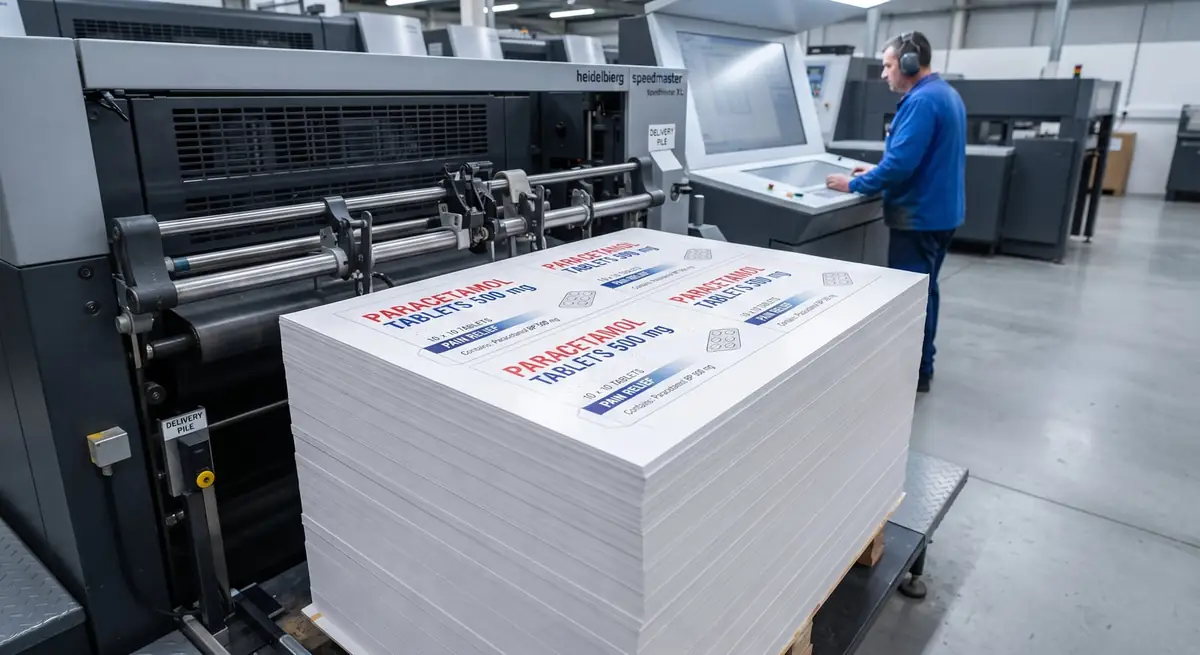
Artwork, rolls and sheets, from the press to the pallet.
Packaging converters live and die by waste and changeovers. VECHR MES records every loss with a reason and keeps the artwork version on every roll and lot.
Wrong reels and expired inks are refused at issue. The approved artwork is acknowledged at the press. Waste is booked by cause. Any roll or carton lot traces back to its film, board, ink and adhesive lots.
Two worked examples: a flexible packaging job and a folding carton job.
- 28 customer rolls slit from 7 master rolls
- 407,992 good cartons from 52,800 sheets
- 100 % of waste recorded with a reason, in both jobs
- Flexible job
- PET (Polyethylene Terephthalate) printed in 8 colours to artwork V3, laminated to PE (Polyethylene), 67 g/m²
- Ordered
- 4,400 kg, accepted between 3,960 and 4,840 kg
- Made
- 7 master rolls slit into 28 customer rolls: 66,144 m² = 4,431.6 kg on 4 pallets
- Carton job
- Paracetamol 500 mg carton, 8 to a sheet on GC1 board
- Ordered
- 400,000 cartons, up to 5 % over, nothing under
- Made
- 52,800 sheets in 6 lots became 407,992 cartons on 18 pallets
Why square metres for film: it is the only quantity conserved through print, lamination and slitting. Kilograms stay an alternative unit, so the order, the receipt and the customer all see kilograms.
Two lines, walked stage by stage.
Pick a line, then scroll to follow the job.
-
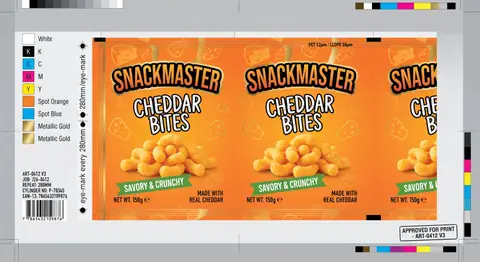 01 version Artwork VECHR MES records Approved proof acknowledged at the press
-
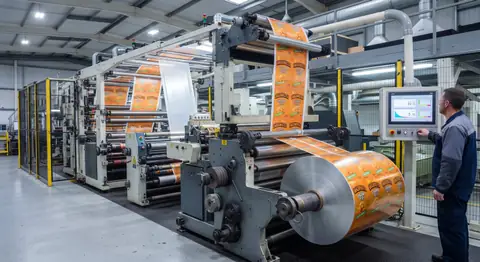 02 m² Printing and lamination VECHR MES records Artwork version and cylinder set per roll
-
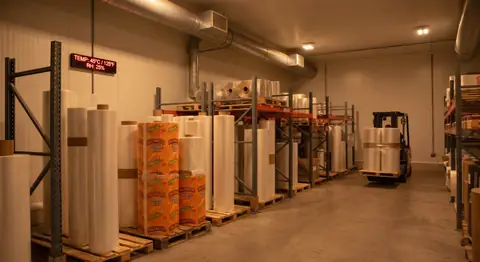 03 master roll Curing VECHR MES records Curing time in the schedule before slitting
- One master, four rolls
-
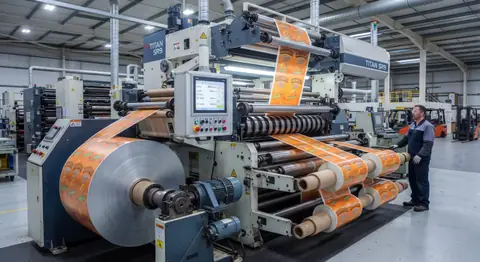 04 customer rolls Slitting VECHR MES records Split into named rolls, linked to the master
-
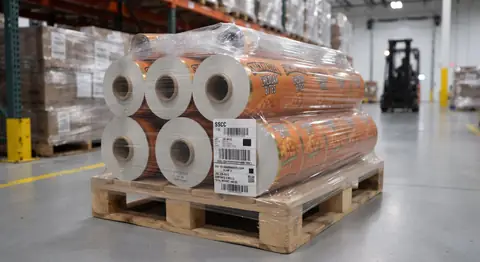 05 kg · pallet Palletising VECHR MES records Roll weight from the scale, SSCC per pallet
-
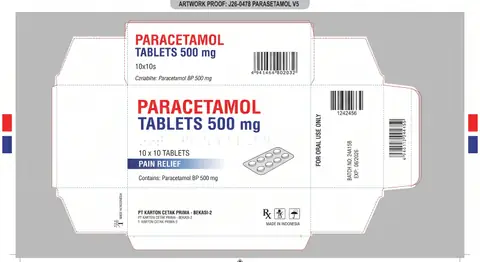 01 version Artwork VECHR MES records Proof on the work instruction
-
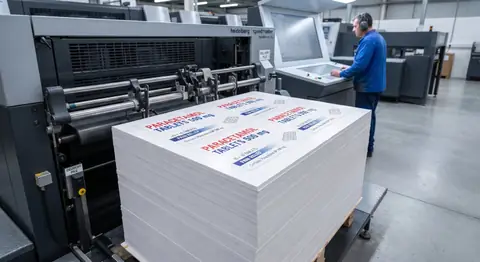 02 sheets Print and varnish VECHR MES records Colour, register and plate set
-
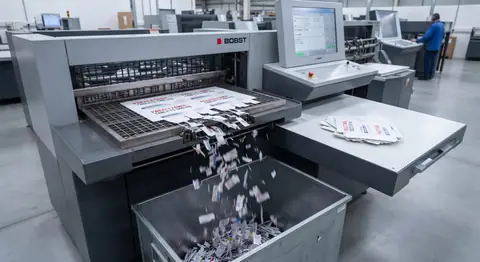 03 sheets → blanks Die-cut and strip VECHR MES records Crease and dimensions
- Sheets become cartons
-
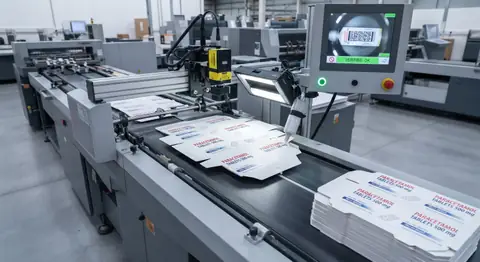 04 cartons Folder-gluer VECHR MES records Camera, pharmacode and Braille checks
-
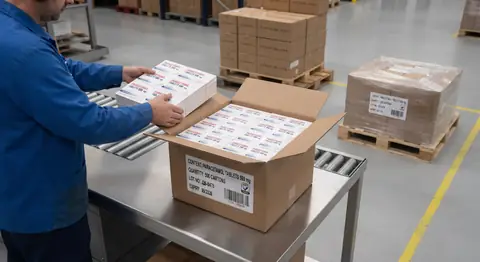 05 cases Pack VECHR MES records Cartons counted into cases
-
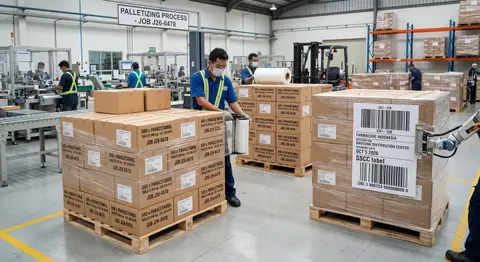 06 pallet Pallet VECHR MES records SSCC, receipt posted to SAP
SAP owns stock. VECHR MES owns what happened on the line.
| Record | Owned by | What the other side does |
|---|---|---|
| Released order, BOM (Bill of Materials), materials and units | SAP | Copied at release, gross of expected waste |
| Approved artwork version and proof | Prepress | Shown and acknowledged at the press, stored per roll or lot |
| Execution, waste by cause, genealogy | VECHR MES | Confirmations and scrap by reason go to SAP |
| Roll and lot numbers | VECHR MES or SAP, decided in the workshop | Carried on every posting |
| Stock | SAP | VECHR MES posts a receipt per closed pallet |
| Machine values | Edge Agent | Metres, sheets, states, register and defects to VECHR MES |
Every loss gets a reason, and a wrong reel is refused at the press.
Today Waste is one number at the end of the job.
With VECHR MES Every loss is booked by cause: makeready, splice, edge trim, rejects.
Today The wrong reel reaches the press.
With VECHR MES Each reel and ink lot is scanned. Wrong or expired material is refused.
Today The artwork version lives in someone's head.
With VECHR MES The approved version is acknowledged and stored per roll or lot.
Today A complaint means searching job tickets.
With VECHR MES A roll traces back to its film, ink and adhesive lots.
How to read the status: Ready runs on the standard product. Configured is assembled in your project from existing building blocks, without new code. Built on request is developed once discovery confirms the need.
| Stage | How VECHR MES handles it | Status |
|---|---|---|
| Material check | Each reel and ink lot scanned at issue. Wrong, expired or blocked material is refused, FIFO (First In, First Out) or FEFO (First Expired, First Out) with a reason. | Ready |
| Artwork at the press | The revisioned work instruction carries the proof, acknowledged at start. Scanned version and cylinder set stored per roll. Refusing a mismatch is a flow. | Ready Configured in your project |
| Setup to first good | Changeover minutes and crew, trial metres as makeready scrap, first-off approval. No running before it passes is a flow. | Ready Configured in your project |
| In-process checks | An inspection plan per operation on a revisioned specification, PLC (Programmable Logic Controller) values read automatically, out of limit raises a non-conformance | Ready Configured in your project |
| Waste | Scrap with reason groups per operation: makeready, splice, edge trim, defect removal | Ready |
| Curing | 24 hours in the room, in the schedule, released to the slitter after a lab pass | Ready Configured in your project |
| Slitting | Lab results on the master, split into four named customer rolls, linked to the master | Ready |
| WIP between steps | Each roll or lot queued, in process or on hold at one step. A part roll keeps its balance. | Ready |
| Line clearance (carton) | Acknowledgement plus a pass or fail check with two names. A failed item refuses the start. | Ready Configured in your project |
| Pallets | Each pallet gets an SSCC and is closed in VECHR MES | Ready |
| Tools | Cylinders, plates and dies are not tool records yet. The set is stored as a value and plates are consumed as material. | Built on request |
One job, the same seven moments of truth.
Ready, setup, first good, run, handover, reconcile, release. Every job runs the same way.
Ready for brand owners who audit their suppliers.
- Line clearance with two names before a job starts
- In-process checks per operation, on a revisioned specification
- Pharmacode and Braille checks recorded at the folder-gluer
- Out of limits raises a non-conformance
- Lots held and released by QA (Quality Assurance)
- Pallets labelled with a GS1 SSCC (Serial Shipping Container Code)
Presses, folder-gluers and cameras report straight into the job.
Values read from the machine land on the roll or lot that is on it.
| Machine signal | What happens in VECHR MES | Status |
|---|---|---|
| Register error, viscosity, roll weight | Data collection value, non-conformance if out of limit | Ready |
| Press run, stop, makeready | Resource state with reason, such as cylinder change or web break | Configured in your project |
| Web-inspection defects | Value recorded, removed sections booked as defect scrap | Configured in your project |
| Press waste-sheet and camera reject counts | Scrap with a reason on the lot on the machine | Configured in your project |
| Camera code mismatch (pharmacode) | Critical non-conformance, lot held automatically | Configured in your project |
| Spectrophotometer ΔE, lab testers | Data collection value, by file or MQTT | Configured in your project |
OEE (Overall Equipment Effectiveness) per machine from output, scrap and standard rate. Quantities are stored in one unit, so sheets and cartons compare. Makeready, plate change and die change are reasons of their own.
A complaint about one roll traces to its film, ink and adhesive lots.
A customer roll's report includes its master roll's records: one report, from the pallet back to the raw lots.
A recall, step by step.
- 1 Start from the complaint Scan the pallet SSCC or the roll label.
- 2 Roll to master The split link leads to the master roll.
- 3 Master to raw lots Film, ink and adhesive lots, with press and lab values.
- 4 Raw lot to other rolls A recall search finds every master and customer roll it touched.
- 5 Hold and block A held roll cannot move, be slit, packed or received.
For cartons, a mix-up traces from the pallet to the lot, the folder-gluer and the previous job's clearance record, with names and times.
The press or the folder-gluer sets the pace.
Changeovers are what you sell capacity with, so they are first-class in the plan.
- Drum The bottleneck that limits the whole plant. VECHR MES detects it automatically from the load.
- Buffer How many minutes earlier the steps before the drum start, so it never waits.
- Rope The release rule: upstream work starts at drum free minus buffer. Steps after the drum run forward.
Illustrative timing: the operations before the bottleneck take 45 minutes, and the bottleneck is free at 10:00.
| Need | How it is handled |
|---|---|
| Finite schedule | All machines, calendars, shifts and breakdowns |
| Changeover | A matrix per machine, from material to material, netted with cleaning time |
| Drum | DBR (Drum-Buffer-Rope) paced to the press, or to the folder-gluer for small pharma cartons |
| Curing | Curing capacity and time in the schedule |
| Labour and maintenance | Crew size, certification, labour tracking, maintenance on running hours |
| Sequence | The planner sequences. The scheduler does not reorder, and gang runs are not modelled. |
Press changeover minutes per job are measured automatically, so the changeover matrix can be tuned from real data.
Orders come down gross. Good quantity and waste go back up.
The order is released with room for expected waste. What you made, and why the rest was lost, flows back.
Film and board go out. Pallets come in.
| SAP movement | Posted when | Status |
|---|---|---|
| Production order in | SAP pushes through the API, or a timed pull | Configured in your project |
| Goods issue (261) for film, board, ink, glue | Material is consumed, in kilograms or sheets | Configured in your project |
| Pallet goods receipt (101) and reversal (102) | A pallet is closed or voided, with SSCC and lot | Configured in your project |
| Scrap and confirmation | Scrap by reason, output and order status | Configured in your project |
| Release, block, reject (321, 344, 350) | Hold released, hold or non-conformance | Configured in your project |
| Posting log with nightly reconciliation | Every pallet and movement posted exactly once | Built on request |
Interface rules
- Decide whether the order is gross or net, and in kilograms or square metres
- Decide whether a receipt uses nominal or weighed kilograms
- New artwork: a new material or a new revision
- Today an event is retried while VECHR MES runs, so a posting log is the recommended design
Execution, waste, genealogy and scheduling run today.
Ready
- Order, routing, operator terminal, split, scrap by reason
- Genealogy from customer roll or lot to raw lots
- Data collection, non-conformance, hold, release signature
- Material check at issue, changeover and first-off record
- Roll and lot WIP (Work in Progress), part rolls, roll balance
- Advanced Scheduling: changeover matrix, curing, DBR
- Pallets with SSCC
- OEE, downtime, maintenance, labour tracking
Configured in your project
- SAP postings
- Counter flows from press and camera
- Automatic hold on critical readings
- Recall search from raw lot
- First-good and clearance vetoes
- Curing release, inspection frequency, close-out
Built on request
- Customer and tolerance on the job
- Cylinders, plates and dies as tools
- Machine recipes, defect maps
- Labels, one lot per pallet
- AQL, gang runs, sequencing optimiser
Proof of Concept: one press line, measured against your own tallies.
Your jobs, your materials, against an SAP sandbox.
| Area | Acceptance criterion |
|---|---|
| Waste | Waste per job by cause within 2 % of the operators' tally |
| Trace | Customer roll to film, ink and adhesive lots in under 5 minutes |
| Changeover | Press changeover minutes per job measured automatically |
| First good | No production run after a changeover until the first-off has passed |
| Camera (carton) | A pharmacode mismatch holds the lot within one minute |
| SAP | Every pallet receipt posted exactly once, with zero reconciliation differences |
Decisions we make together in the first workshop.
- Gross or net order, in kilograms or square metres
- Who numbers rolls and lots: VECHR MES or SAP
- Nominal or weighed kilograms on the receipt
- Which readings or camera events hold a roll or lot
- One lot per pallet, per case, or mixed
- New artwork: new material or new revision
What changes, job by job.
Illustrative inputs from the worked example. Your own figures replace them in the Workshop Assessment.
| What changes | Today | With VECHR MES |
|---|---|---|
| Makeready and splice waste, flexible job | 1,100 m² | 825 m² |
| Cylinder change on the press | 120 min | 110 min |
| Sheet waste, carton job | 3.4 % | 2.4 % |
| Folder-gluer format change | 45 min | 35 min |
Frequently Asked Questions
Can we sell by the kilogram and plan by the square metre?
Yes. Square metres, kilograms, rolls and pallets are alternative units on the same material, and every posting carries each one.
Do you track cylinders, plates and dies?
Not as tools yet. The cylinder set is stored on each roll, and plates are consumed as a job-specific material, so they appear in the genealogy.
Can a wrong artwork version stop the press?
Yes, with a blocking flow configured in your project. The scanned version is stored per roll either way.
How do we see where we land against the customer's tolerance?
The order is released gross to cover expected waste. Good quantity and waste by reason are recorded live, so the result is visible before the job closes.
Keep reading
- How to calculate OEE, with a worked example and the usual mistakes OEE is Availability times Performance times Quality. Here is the formula, a full worked shift, why manually calculated OEE is almost always too high, and how to read the number properly.
- Choosing MES software: the questions a presentation cannot answer Every MES vendor can run a smooth demo. What separates them is how the system holds up when your process changes. Here are the questions that have to be proved, the costs that rarely appear in a proposal, and the early signs an implementation will go badly.
- What is an MES? A plain-language guide for manufacturers A Manufacturing Execution System (MES) connects the production plan in your ERP to what actually happens on the shop floor. Here is what an MES does, what falls outside its scope, and when your plant starts to need one.
Terms on this page(22)
- APIApplication Programming Interface
- The way one system calls another, such as SAP sending orders to VECHR MES.
- AQLAcceptable Quality Limit
- The highest defect rate a sampling inspection still accepts for a lot.
- BOMBill of Materials
- The list of materials, and how much of each, needed to make one product.
- DBRDrum-Buffer-Rope
- A scheduling method that paces the whole line to its bottleneck (the drum).
- FEFOFirst Expired, First Out
- Use the material that expires soonest first.
- FIFOFirst In, First Out
- Use the material that arrived first, first.
- GS1GS1 standards
- The global body behind product barcodes and identifiers such as GTIN and SSCC.
- HMIHuman-Machine Interface
- The screen on a machine that the operator uses to run it.
- MESManufacturing Execution System
- The system that runs and records production on the floor: orders, materials, steps, quality and machines.
- MMMaterials Management
- SAP's module for materials, stock and purchasing.
- MQTTMessage Queuing Telemetry Transport
- A lightweight publish/subscribe protocol for sending machine data.
- OEEOverall Equipment Effectiveness
- Availability × performance × quality: how much of the planned time turned into good product.
- PEPolyethylene
- A plastic film, often the sealing layer in flexible packaging.
- PETPolyethylene Terephthalate
- A clear, strong plastic film, often the printed layer in flexible packaging.
- PLCProgrammable Logic Controller
- The industrial computer that controls a machine and holds its live values.
- PPProduction Planning
- SAP's module for production orders and planning. PP-PI is the process-industry variant.
- QAQuality Assurance
- The team that releases product and owns the quality system.
- QMQuality Management
- SAP's quality module: inspection lots, results and usage decisions.
- SAPSAP ERP
- The ERP most large Indonesian manufacturers run. S/4HANA is its current generation.
- SDSales and Distribution
- SAP's module for sales orders and deliveries.
- SSCCSerial Shipping Container Code
- The 18-digit GS1 number that identifies one pallet or shipping unit.
- WIPWork in Progress
- Material that has started production but is not finished yet.
See VECHR MES on your own process.
A walkthrough built around how your plant runs. Not a generic demo.